
A conceptual illustration of urban development in Tirana.
The Albanian real estate market: prices, demand, financing, risks, and investment opportunities in 2026.
Investment is not a matter of time, but of vision
The best time to invest may be during a crisis. This idea, known to experienced investors, does not mean that every crisis automatically creates a good opportunity or that every property is an investment profitable. This means that periods of uncertainty and change can create room for thoughtful purchases if price, quality, and risk are carefully analyzed.
In Albania, the real estate market has undergone significant changes. Urban development, new constructions, the interest of foreign buyers, and bank financing have influenced how properties are valued and traded. The year 2026 has shown more moderate rates of price growth. This does not mean that Albania is necessarily in crisis; the title addresses the principle of investing in challenging times and the need for informed decision-making.
What is currently happening with property prices in Albania?
Data reported for the first half of the year 2026 show a market that continues to have activity, but at a faster pace moderate growth. The indicators mentioned in the analysis are:
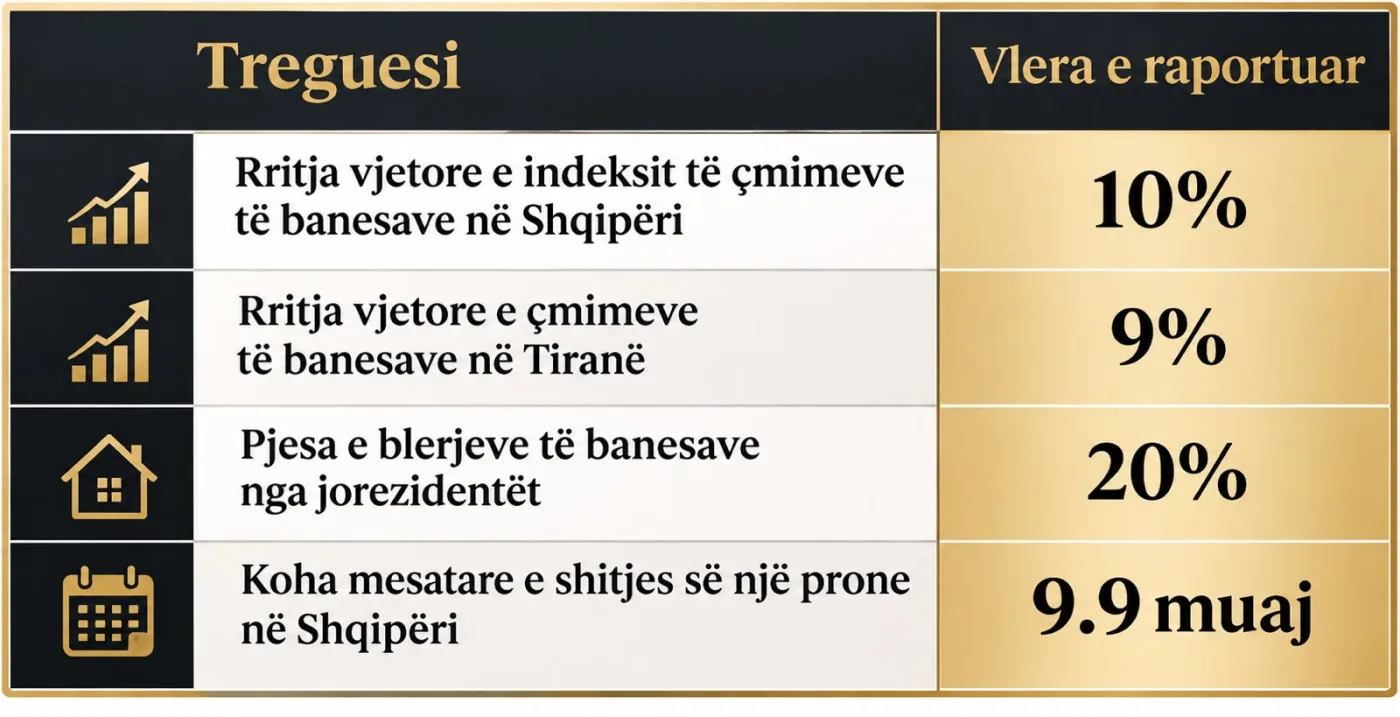
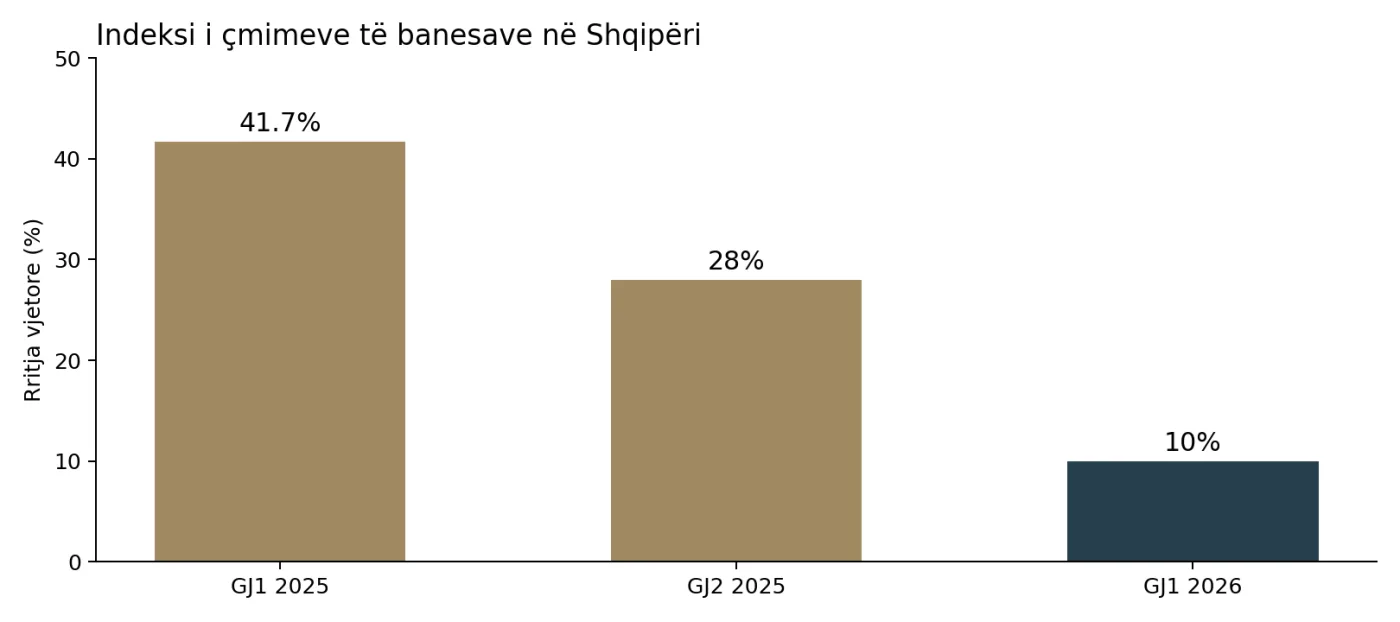
The reported annual growth trend of the price index: H1 2025 – 41.7%; H2 2025 – 28%; H1 2026 – 10%. These figures illustrate the slowdown in growth and not necessarily a decline in prices.
Chart: annual price increases by the periods mentioned in the analysis.
For investors, this means that the assumption that every property will automatically become more expensive is no longer sufficient. Location, construction quality, actual demand, and purchase price are becoming increasingly decisive.
Tirana: potential, but also a need for selectivity
Tirana remains one of the main real estate markets in the country. Its role as an administrative, economic, university, and service center creates demand for housing and business premises. According to the data cited in the analysis, the average time to sell a property in Tirana has increased from 8.1 to 9.7 months in the first half of 2026. This means that the sales process may require more time even in a market where prices have increased. The investor must evaluate the location, accessibility, infrastructure, construction quality, layout, rental demand, and competitive supply. A high-priced property is not necessarily a property with high investment value.
The Albanian coastline and the interest of foreign investors
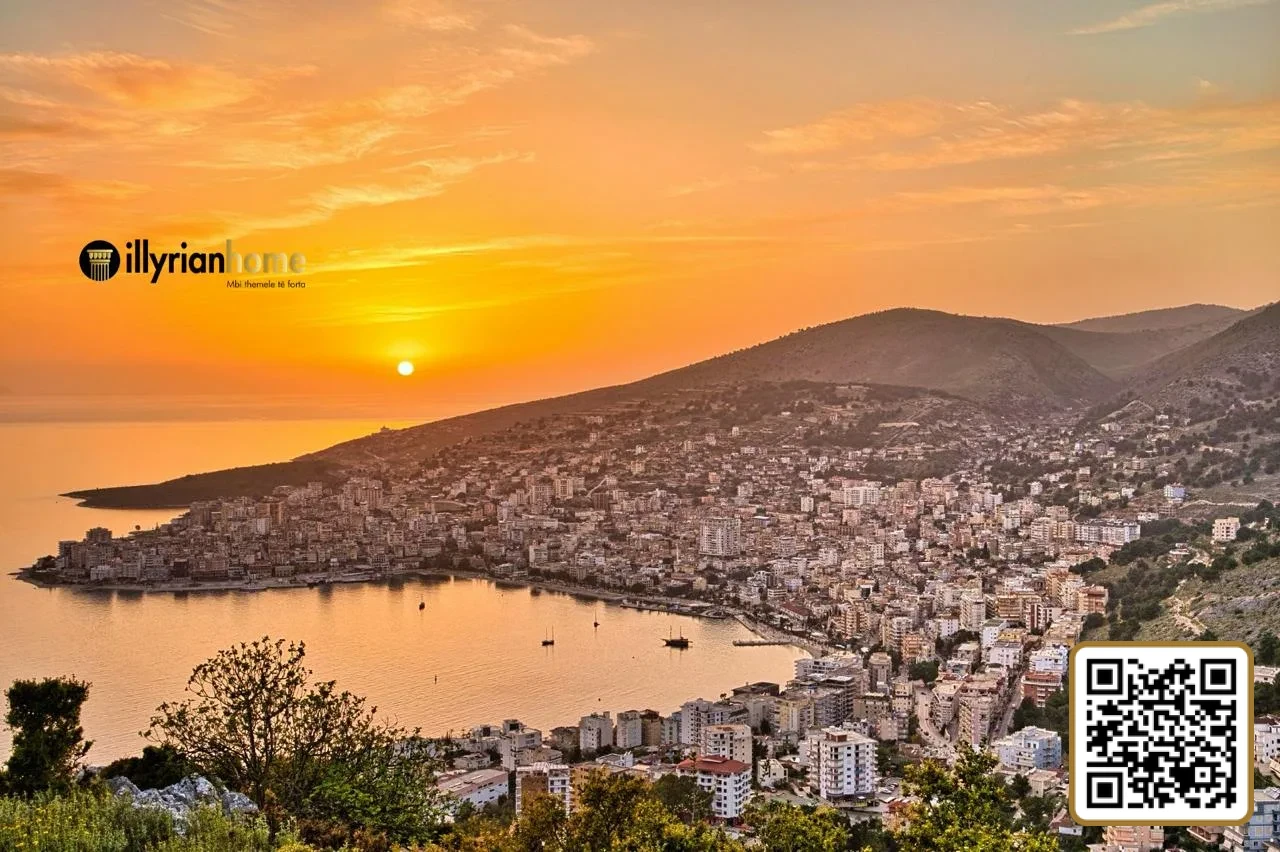
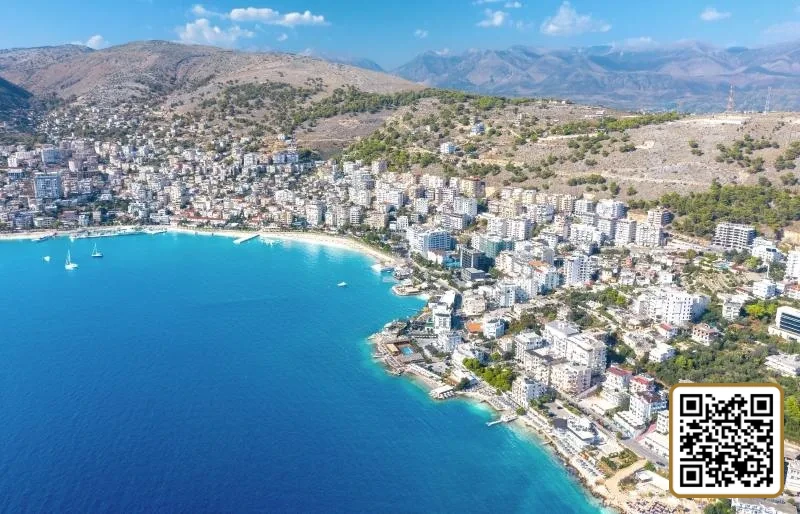
A conceptual illustration of the development of coastal areas.
The development of tourism has created opportunities for properties used for seasonal stays, tourist rentals, or long-term residence. Each category has a different income and risk profile.
According to the cited indicators for the first half of 2026, about 20% of reported housing sales were made by non-residents; about 85% of these buyers were citizens of the European Union. This expands the potential buyer base beyond the domestic market. Coastal investment must take into account seasonality, administrative costs, competition, building standards, and the legal status of the property. Profitability depends on actual income and costs, not just appearance or location.
New constructions: development and competition
According to the cited INSTAT statistics, in the second quarter of 2026, 460 building permits for new buildings were approved, compared to 352 in the same period of 2025, an increase of 30.7%. Permits are not required confused with the number of completed or sold properties. An increase in supply creates opportunities for buyers, but also competition among properties. Architectural quality, functionality, administration, energy efficiency, and infrastructure influence the long-term value.
Bank financing and market impact
According to the cited indicators from the Bank of Albania, mortgage loans increased by 16.1% year-on-year during the first half of 2026, while the average interest rate for mortgage loans in lek was around 3.9%. Actual financing conditions vary depending on the bank and the borrower.
From July 2025, restrictions on the loan-to-property value ratio and on debt-to-income payments have been in effect. The investor must analyze the cost of financing, repayment capacity, and the sustainability of the investment under different scenarios.
What makes a property a good investment?
- Location and development prospects. Access, infrastructure, and sustainable demand influence long-term potential.
- Price relative to the market. Comparison with similar properties and transactions helps avoid overvaluation.
- Potential for income. Rent, lease-free periods, and administrative expenses must be taken into account.
- Legal certainty. Ownership, registration, encumbrances, permits, and contracts must be verified before financial commitment.
- Liquidity. It is necessary to assess how easily and within what timeframe the property can be resold.
Should we wait for prices to drop?
Waiting can be reasonable when prices are not justified by the characteristics of the property, when financing is inadequate, or when the investor lacks clarity about their goals. But waiting without strategy does not It guarantees a better opportunity. The cited indicators for 2026 point to a slowdown in price growth at the national level, not a general decline in the index. The most important question is not only whether prices will rise or fall, but whether the property valued today represents a good opportunity in relation to price, potential, and risk.
The outlook of the Albanian market in the coming years
The development of infrastructure, tourism, purchasing power, demographics, the quality of new projects, and transaction transparency will influence the market's performance. It cannot be assumed that all areas and categories of properties will have the same progress.
Some properties may benefit from improved infrastructure or stable housing demand, while others may face high competition or overvalued prices. Therefore, the ability to identify real value is important.
Conclusion: Investing in times of crisis requires knowledge and vision
Periods of crisis or uncertainty can create opportunities for investors who have capital, patience, and analytical skills. But a crisis does not automatically make every purchase profitable. Success is determined by market knowledge, accurate analysis, property selection, and risk management.
The best time to invest may be during a crisis, not because every property will be worth more tomorrow, but because prepared investors can identify opportunities that others do not see.
At Illyrian Home, the approach to real estate is based on professional valuation, transparency, and identifying properties that align with clients' objectives.